
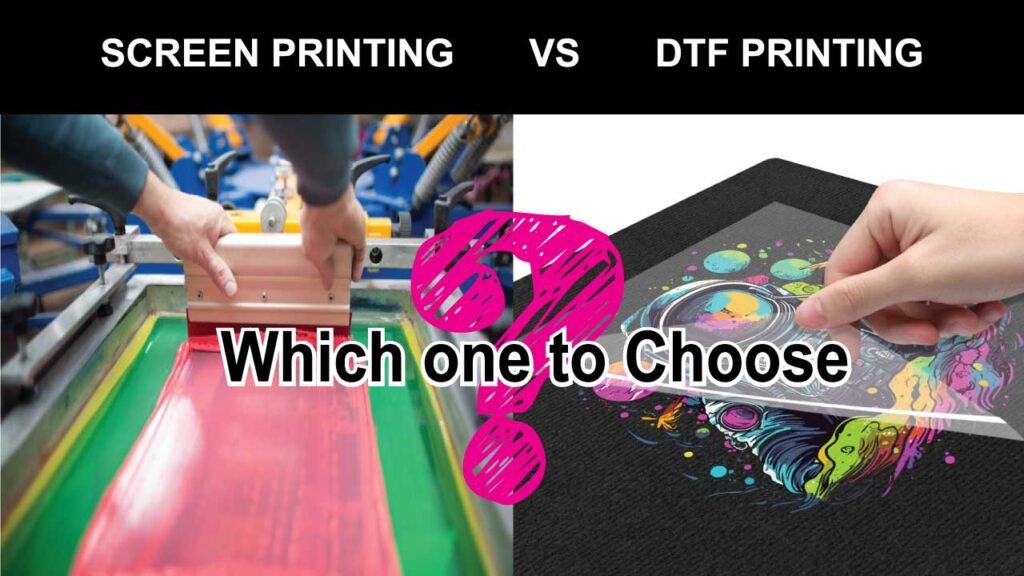
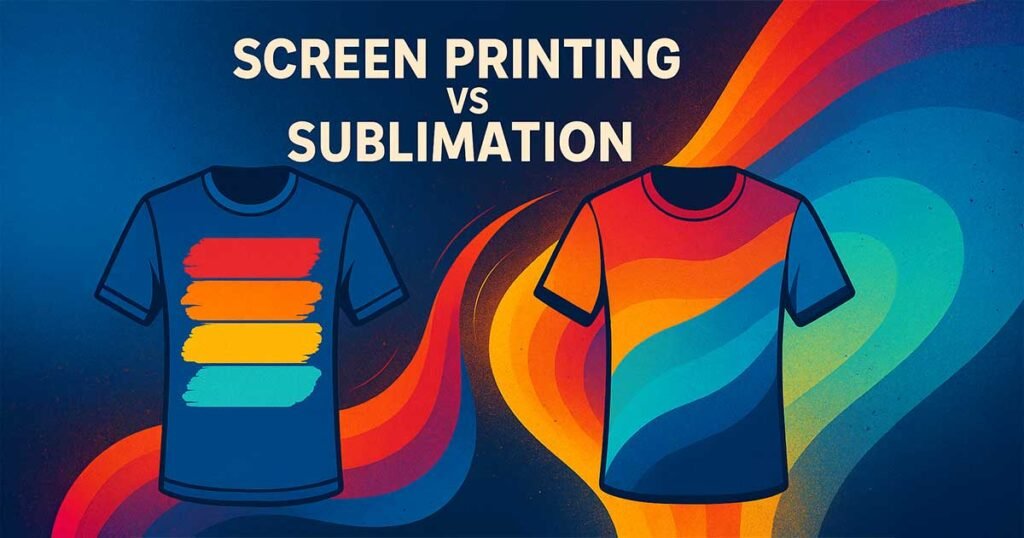
Remember that band tee you loved until it cracked and peeled after three washes? Or the vibrant design that felt like cardboard against your skin? If you’ve ever been disappointed by custom apparel, chances are the printing method was the unseen culprit. In the bustling world of garment decoration, two heavyweights dominate: the seasoned veteran Screen Printing and the agile newcomer Direct-to-Film (DTF). Choosing between them isn’t just about ink on fabric – it’s about cost, creativity, durability, and the very feel of your brand. Let’s cut through the hype and dissect the real differences in this Screen Print vs DTF face-off.
The Old Guard: What is Screen Printing?
Screen printing (aka silkscreening) is the O.G. of garment decoration, tracing its roots back centuries. It’s a stencil-based process where ink is forced through a fine mesh screen onto the fabric. Think of it like a sophisticated sponge stencil.
- Design Separation: Complex designs are split into individual color layers (each color needs its own screen).
- Screen Prep: Each screen is coated with emulsion, exposed to UV light with the design layer, and washed out, leaving open mesh areas for ink.
- Printing: Screens are mounted on a press. Fabric is laid flat, ink is applied, and a squeegee drags it through the screen mesh.
- Curing: The printed garment passes through a conveyor dryer (often 320°F+) to cure the ink, bonding it to the fabric.
Screen Printing’s Sweet Spot:
- High-Volume Orders: Setup costs are amortized over large runs, making per-unit cost unbeatable for bulk.
- Simple & Bold Designs: Flat colors, thick lines, and text shine.
- Classic Feel: Plastisol ink (the most common type) delivers that familiar, slightly raised “vintage tee” texture.
- Extreme Durability: Properly cured plastisol can survive countless industrial washes. It’s the workhorse of uniforms and merch.
According to SGIA (Specialty Graphic Imaging Association), screen printing still commands a massive share of the decorated apparel market, valued in the billions, thanks to its reliability for large orders.
The Disruptor: What is Direct-to-Film (DTF) Printing?
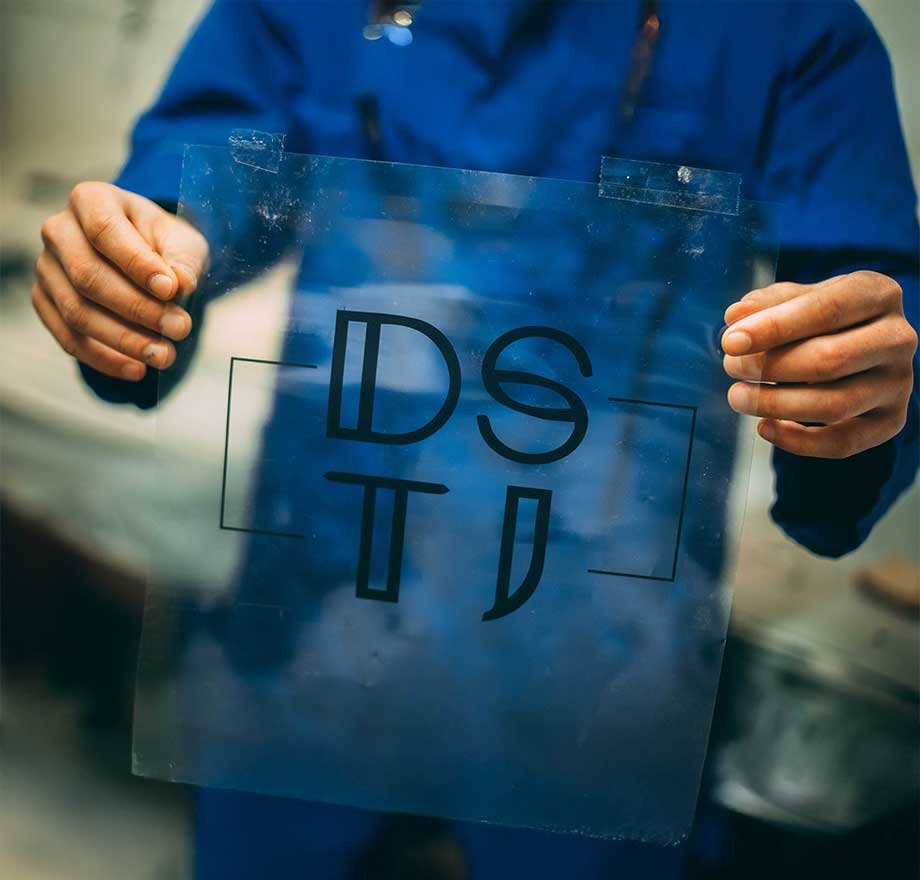
DTF burst onto the scene around 2018-2019, leveraging advancements in inkjet technology and adhesive powders. Forget screens; DTF prints your design onto a special PET film first, then transfers it whole to the garment.
How it Works:
- Printing: The full-color design is printed directly onto a clear, coated PET film using specialized DTF pigment inks (CMYK + white).
- Powder Application: While the ink is still wet, a hot-melt adhesive powder is sprinkled evenly over the entire printed area.
- Melting the Powder: The film passes through a curing oven, melting the adhesive powder into a cohesive layer.
- Transfer: The film is placed ink-side down onto the garment. A heat press applies pressure and heat (around 320°F for 10-15 seconds), bonding the entire design in one go.
- Peeling: Once cooled slightly, the PET film is peeled away, leaving the design fused to the fabric.
DTF’s Game-Changing Advantages:
- Unlimited Colors & Complexity: Photorealistic images, gradients, and intricate details? No problem. No color separations needed!
- Low Setup Cost & Speed for Short Runs: No screens = minimal setup. Print one shirt or a hundred with equal ease.
- Material Versatility: Works brilliantly on cotton, polyester, blends, nylon, canvas, even leather and wood – often without pre-treatment. Screen printing struggles here.
- Softer Hand Feel: When done well, DTF transfers can feel remarkably soft and flexible, closer to DTG (Direct-to-Garment) but more durable.
A recent FESPA report highlights DTF as the fastest-growing digital textile print method, driven by its accessibility for small businesses and ability to handle complex jobs instantly.
Screen Print vs DTF: The Nitty-Gritty Comparison
Let’s break down the critical factors side-by-side:
| Feature | Screen Printing | Direct-to-Film (DTF) |
|---|---|---|
| Setup Cost | High (Screens, emulsion, exposure) | Very Low (Film, ink, powder only) |
| Run Cost | Very Low (High Volume) | Moderate (Higher ink/powder cost) |
| Best For | Bulk Orders (100+ units) | Short Runs (1-100+ units) |
| Design Complexity | Limited colors, simpler art | Photorealistic, unlimited colors, fine detail |
| Color Vibrancy | Excellent (Opaque inks) | Very Good (White underbase crucial) |
| Hand Feel | Can be thick/stiff (Plastisol) | Generally softer, more flexible |
| Durability | Excellent (Especially plastisol) | Very Good (Improving rapidly) |
| Fabric Range | Primarily Cotton (Poly needs pretreatment) | Cotton, Polyester, Blends, Nylon, Hardsurfaces |
| Turnaround (Setup) | Slow (Hours/Days for screens) | Very Fast (Minutes) |
| Turnaround (Printing) | Fast (Once setup) | Moderate (Per-transfer time) |
| Environmental Impact | Higher waste (Chemicals, screens) | Lower waste (Digital process) |
Diving Deeper into Key Differences:
- Cost & Economics: The Volume Threshold
- Screen Printing: High upfront costs scream “Go Big or Go Home.” Screens cost $25-$75+ each. For a 6-color design on 500 shirts? The per-shirt cost plummets. For 12 shirts? Prohibitively expensive.
- DTF: The dream for startups and small batches. Your costs are essentially ink, film, powder, and time per transfer. One shirt or fifty, the setup is the same. Per-unit cost stays relatively stable, making it economical where screen printing isn’t. (Personal Insight: My small boutique switched to DTF for custom orders under 50 units – our profit margins thanked us immediately, and customers loved the design freedom.)
- Design Freedom: Unleashing Creativity
- Screen Printing: Each color is a physical layer. More colors = more screens = more cost/time. Fine details and gradients are challenging. Halftones can simulate shades but have limits.
- DTF: It’s a digital printer! If you can see it on screen, DTF can likely print it. Millions of colors, photographic detail, subtle gradients – all printed in a single pass. This is revolutionary for artists and brands wanting intricate, full-color designs without massive minimums.
- Feel & Comfort: The Touch Test
- Screen Printing: Plastisol (the standard) sits on top of the fabric, creating that classic (sometimes stiff) feel. Water-based inks offer a softer hand but are trickier to use and less opaque on darks. Discharge printing is super soft but limited to cotton.
- DTF: The adhesive powder layer is key. When applied correctly and cured well, the transfer integrates smoothly. The result is significantly softer and more flexible than plastisol, especially on larger prints. It’s not quite as breathable as top-tier water-based screen printing or DTG, but it’s a massive leap from traditional plastisol.
- Durability & Washability: The Long Haul
- Screen Printing: The undisputed champion for longevity when using plastisol. It can withstand industrial laundering, harsh chemicals, and years of abrasion – think workwear or heavy-use sportswear.
- DTF: Durability has been its initial question mark, but technology is advancing fast. High-quality DTF inks and proper pressing now yield transfers that survive 50+ home washes easily. While perhaps not quite matching decades-old plastisol formulas yet for extreme conditions, it’s highly durable for most apparel uses. Peeling or cracking is usually a sign of poor application (under-curing, low-quality powder) rather than an inherent flaw.
- Material Versatility: Beyond the Cotton Tee
- Screen Printing: King of cotton. Polyester requires special inks (poly blends are common) and often pretreatment. Performance fabrics or non-textiles? Generally not feasible.
- DTF: This is where DTF truly shines. The hot-melt adhesive bonds incredibly well to a vast array of materials: 100% poly performance wear, 50/50 blends, nylon bags, hats, even hard surfaces like mugs or wood (with specific powders). This opens up a world of product possibilities screen printing simply can’t touch efficiently.
- Speed & Workflow: From Art to Arm
- Screen Printing: Slow setup (screen reclaiming, coating, exposing, washing, setup on press), but blazing fast actual printing once rolling. Perfect for pumping out thousands of identical shirts.
- DTF: Near-instant setup (load file, print film, powder, cure). The bottleneck is the heat press time per garment (typically 15-20 seconds per transfer, plus cooling/peeling). Ideal for quick turnarounds on diverse small jobs. Need 24 different designs tomorrow? DTF laughs. Screen printing cries.
- The Eco Angle:
- Screen Printing: Generates chemical waste (emulsion, reclaimers, solvents), plastic screen disposal, and unused ink waste. Water-based is cleaner but harder.
- DTF: More digital = less physical waste. While plastic film and powder are used, the process generally has a smaller chemical footprint. Water-based DTF inks are also emerging.
So, Screen Print or DTF? Choosing Your Champion
The winner depends entirely on YOUR project:
- Choose Screen Printing If:
- You’re printing 100+ identical items.
- Your design uses limited, bold spot colors.
- Maximum durability for industrial use is non-negotiable (e.g., mechanic uniforms).
- You primarily print on 100% cotton.
- That classic, slightly raised print feel is desired.
- Choose DTF If:
- You need small batches (1-100 units) or one-offs.
- Your design is full-color, photographic, or highly detailed.
- You’re printing on polyester, blends, or diverse materials (hats, bags).
- A softer hand feel is a priority.
- Fast turnaround on multi-design jobs is critical.
- Lower upfront investment is needed.
The Future is Hybrid (and Bright):
Don’t see this as a strict either/or. Savvy print shops are embracing both. They might use screen printing for the bulk base orders of a core design and leverage DTF for rush jobs, samples, complex variations, or printing on difficult substrates. DTF technology is also evolving rapidly – expect even softer feels, faster speeds, and enhanced durability in the near future.
The Final Peel
The Screen Print vs DTF battle isn’t about one eliminating the other. It’s about expanding possibilities. Screen printing remains the cost-effective, ultra-durable powerhouse for large-scale, simple designs. DTF is the democratizing force, unlocking stunning, full-color prints on almost anything with minimal setup. It empowers small businesses, artists, and brands to experiment and fulfill orders that were previously impossible or prohibitively expensive.
Your next step? Consider your project’s specific needs – quantity, design complexity, fabric, budget, and feel. Armed with this knowledge, you can confidently choose the method that transforms your vision into wearable art that lasts.
Ready to experiment? Share your biggest screen print or DTF win (or disaster!) in the comments below! Have a project in mind but unsure which method fits? Ask away! And if you found this deep dive helpful, share it with a fellow creator or apparel enthusiast – let’s demystify the print world together.


![Tribal Skull Warrior – T-Shirt [warrior spirit]](https://w88primewear.com/wp-content/uploads/2025/08/WJD-L-000008-T-1-300x450.jpg)